
Cockroaches trigger a lot of questions the moment one’s spotted — mostly because people want to know how worried they should actually be. Do they bite? Can they fly at you? Are they a real health risk, or just gross? This guide answers the cockroach questions people search most, in plain language, backed by how these insects actually behave.
Quick Answers (Read This First)
- Do cockroaches bite? Rarely — usually only in severe infestations
- Can cockroaches fly? Some species can, others barely do
- Are they dangerous? Yes, mainly through bacteria and allergens, not bites
- Why not seen in daylight? They’re nocturnal by nature; daytime sightings signal a bigger problem
- How fast do they spread? Very — one female can produce hundreds of offspring
Do Cockroaches Bite?
Yes, but it’s rare. Cockroaches can bite humans, though it usually only happens in cases of a severe, long-term infestation where food is scarce — they may nibble on skin, eyelashes, or fingernails while people sleep. For the vast majority of households, bites are extremely uncommon; the bigger risk is what they leave behind (bacteria and allergens), not bites themselves.
What does a cockroach bite look like? If it happens, it usually appears as a small, red, mildly irritated bump — similar to a minor insect bite — and typically heals on its own without treatment. If you notice unexplained bites and suspect cockroaches, it’s a strong signal the infestation has grown large enough to need professional attention.
Can Cockroaches Fly?
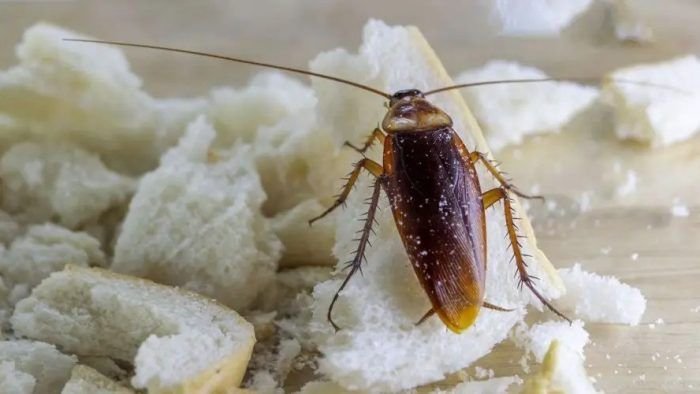
It depends on the species. American cockroaches (the larger, reddish-brown type often found in drains and sewers) have wings and can fly short distances, especially in warm weather. German cockroaches (the small, light-brown type common in kitchens) have wings but rarely fly — they’re built more for fast running than flight. Oriental cockroaches (dark, found in damp basements and drains) have underdeveloped wings and essentially cannot fly at all.
So if something’s flown at you, it’s most likely an American cockroach — and it was almost certainly startled and fleeing, not deliberately flying toward you.
Is a Cockroach Dangerous for Health?
Yes — not because of bites or stings, but because of what they carry and leave behind. Cockroaches pick up bacteria from drains, garbage, and sewage, then transfer it onto kitchen surfaces, dishes, and food as they move around at night. Health risks associated with cockroach infestations include:
- Food contamination — bacteria linked to food poisoning, salmonella, and E. coli
- Allergic reactions — proteins in their saliva, droppings, and shed skin are known allergens
- Asthma triggers — particularly serious for children living in infested homes, a link well-documented by the American Lung Association
- Compliance risk — for restaurants and commercial kitchens, an infestation can violate Dubai Municipality hygiene regulations
This is the main reason professionals recommend treating even a small sighting early. See our guide on professional cockroach control and treatment methods for how this is addressed properly.
Why Don’t Cockroaches Come Out During the Day?
Cockroaches are nocturnal — they avoid light and human activity by nature, preferring to forage for food and water after dark when it’s quiet. Seeing one during the day is actually a warning sign, not a coincidence: it usually means the hidden population has grown so large that some roaches are being forced out of overcrowded hiding spots to search for food, even at the risk of exposure.
If you’re spotting cockroaches during the day regularly, it’s worth reading up on the early warning signs of an infestation before it grows further.
Where Do Cockroaches Hide?
During the day, cockroaches stay hidden in dark, tight, undisturbed spaces:
- Behind and underneath large appliances (fridges, ovens, dishwashers)
- Inside wall cracks and voids
- Under sinks and around plumbing
- Inside cabinet corners and drawer joints
- Around floor drains and bathroom fixtures
They’re drawn to warmth and moisture, which is why kitchens and bathrooms are consistently the most common hiding zones in any home.
Can Cockroaches Climb Walls?
Yes — cockroaches have specialized leg structures and sticky pads that let them climb smooth vertical surfaces, including walls, tiles, and even glass in some cases. This is part of why sealing entry points near the ceiling, around pipes, and along wall-floor joints matters just as much as ground-level prevention.
Do Cockroaches Smell?
Large infestations often produce a distinct musty, oily odor, caused by pheromones cockroaches release to communicate with each other and mark trails. If you notice this smell in a kitchen or pantry with no obvious source, it’s a strong sign of a hidden, established population rather than just a few stray roaches.
How Long Do Cockroaches Live?
Most common household cockroaches live around a few months to a year, but the real issue isn’t individual lifespan — it’s reproduction speed. A single female can produce hundreds of offspring in her lifetime, which is why a small sighting can turn into a full infestation within weeks if left untreated.
Can Cockroaches Survive Without Food or Water?
Cockroaches are famously resilient — they can survive without food for close to a month, but only about a week without water. This is why fixing leaks and removing standing water is one of the most effective prevention steps, often more impactful than food cleanup alone. For a full prevention checklist, see our guide on how to avoid cockroaches before an infestation starts.
Do Cockroaches Mean My House Is Dirty?
Not necessarily. While poor sanitation does attract cockroaches, they can enter even a very clean home through shared walls, drains, cracks, or items brought in from outside — common in apartment buildings where infestations spread between units regardless of individual cleanliness. Dense residential buildings across Dubai see this often, since roaches travel through shared plumbing and utility routes between units.
Types of Cockroaches Commonly Found in Dubai Homes
- German cockroach — small, light brown, fast-breeding, most common in kitchens
- American cockroach — large, reddish-brown, capable of short flight, found in drains and sewers
- Oriental cockroach — dark, slow-moving, prefers damp basements and ground floors
For a deeper species breakdown, the US EPA’s cockroach fact sheet covers general biology and behavior that applies globally, not just in the US. Identifying the species matters for treatment — a German cockroach infestation, for example, generally needs gel baiting due to its rapid breeding cycle, while American cockroaches often require drain and exterior treatment as well.
When Should You Call a Professional?
If you’re seeing cockroaches during the day, noticing a musty odor, or finding droppings near food storage, it’s a sign the population is already established beyond what sprays or traps can fully handle. At that point, it’s worth reading our full guide to choosing the best cockroach pest control in Dubai, which compares DIY options against professional treatment in detail. The same prevention principles (removing water and food sources) also apply to related pests like ants and rodents, so addressing one issue often helps prevent others.
Frequently Asked Questions
Do cockroaches bite humans?
Rarely. Bites are uncommon and typically only occur during severe infestations where food sources are limited. The bigger everyday risk is bacteria and allergens they spread, not bites.
Can all cockroaches fly?
No. American cockroaches can fly short distances, especially in warm weather, while German cockroaches — the smaller, more common household type — rarely fly despite having wings. Oriental cockroaches essentially cannot fly.
Why did a cockroach fly at me?
It was most likely startled and flying away from a threat rather than toward you intentionally — this behavior is more common in American cockroaches.
Are cockroaches more active at night?
Yes, cockroaches are nocturnal and avoid light and activity, which is why they’re rarely seen during the day unless a population has grown large.
Is seeing one cockroach a big problem?
It can be an early warning sign, especially if seen during daylight. Cockroaches typically avoid exposure, so daytime sightings often indicate a larger hidden population.
Do cockroaches carry diseases?
Yes — they can carry and spread bacteria linked to food poisoning and other illnesses, picked up from drains, garbage, and sewage before contaminating household surfaces.
Can cockroaches climb smooth surfaces like glass?
Yes, their leg structure allows them to grip and climb most smooth vertical surfaces, including walls and tiles.
How quickly can a few cockroaches become an infestation?
Very quickly — given consistent food, water, and warmth, a small number of roaches can multiply into a significant population within a matter of weeks.
Still Have Cockroaches After Reading This?
Knowing the facts helps you judge how serious a sighting is — but if you’ve already tried cleaning, sealing gaps, and DIY products with no luck, that’s usually a sign the colony is bigger than it looks. Antipest offers Dubai Municipality-approved, 24/7 cockroach control across Dubai if you’d like a professional opinion.
📞 +971 55 517 5335 · ✉️ info@theantipest.com · Free inspection available